Do you like to roll a lot of dice when you play RPG games? This is not really an invitation to discuss the Big Model or the GNS Theory. You can discuss them but be aware that my attitude and personal opinion of these schools of thought consists of a single word: “Meh…” I looked at the GNS stuff and I find myself smack dab in the middle of the 3 distinct player groups. I’m equal part narrativist, part simulationist and part gamist which I think breaks the system. I think Ron Edward’s theory is really well thought out and really boring at the same time. I don’t dismiss it as useless though. Some of the indie games it influenced look interesting. I never played any of these newfangled narrativist things so I can’t really say how they would work.
I grew up playing RPG games the traditional way – the GM was God Incarnate, each player controlled a single character and had no creative input on the game world. That’s what I know, and anything else seems weird and a bit scary to me. When I was growing up the big divide between players had to do with dice.
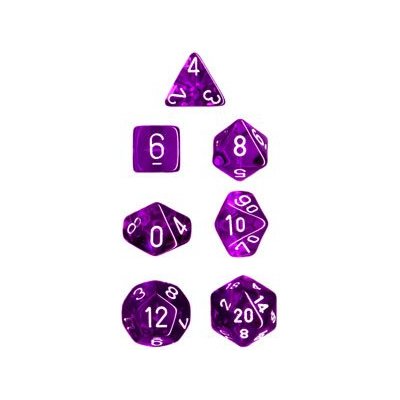
Our flame wars had to do with whether or not do you roll dice and how often. I think it was around the time when White Wolf coined the word “storytelling” to indicate the GM’ing style of their World of Darkness line and we took it and run with it. Our regular GM was a firm believer in Storytelling with capital S as the ultimate way to run his games. He was also a big fan of Amber Diceless. Whatever system we were playing was therefore “amberized” by which I mean “made diceless”.
I told this story to a buddy from a gaming group I joined much later, and he seemed perplexed. “How do you play without dice?” he asked. I didn’t know how to answer this question. You just do. You declare that you want to jump over the ravine, the GM looks at your character sheet and makes a judgment call based on how well you described the action.
“I jump over the ravine” is probably a fail unless your character is a circus acrobat or an Olympic medalist in the long jump.
“I take a long running start, and when I’m in the air I stretch my hands out in front of me to catch the ledge if I’m falling short” is probably a success unless you are a short legged dwarf wearing a plate armor and a backpack full of bricks.
My friend shook his head in disbelief and murmured something about railroading and lack of random chance. He was appalled that my former GM could simply not allow certain actions to be taken. When I played with that that guy though, I didn’t care. We had fun, and were more interested in participating in the cool, fast paced stories he devised for us. Were we railroaded? Perhaps, but it didn’t really matter. I guess that could be tagged as narrativist style of play – I don’t know.
The dice-loving buddy of mine, and me were talking about this while driving to play a Ice Spacemaster GURPS campaign with copious amount of dice rolling, and looking up rules in one of the 8 GURPS rulebooks the GM owned and had sitting on the table at all times. There was nothing wrong with this style of play either. And I enjoyed it just as much as the amberized games in the past.
What I liked about the diceless sessopms was their free wheeling, fast paced gameplay. Without complex rules to slow us down we could usually close a complete chapter of a longer campaign in a single evening. And by that I mean get a quest, get implicated in a major political intrigue, get arrested, escape from jail, expose the evil plot, defeat the bad guys, clear our names and claim our rewards. All in one evening – sometimes two. In my experience this sort of thing is almost never possible with a dice-heavy gaming – combat alone bogs everything down and always takes forever. What I like about this kind of games however is their unpredictability. There is something exciting about dice based combat situations when you know you character’s life depends on whether or not you can make the next roll.
My ideal environment probably lies somewhere in the middle. Stuff like social interaction, spot checks, intimidation and etc are best done diceless. Randome encounter tables are definitely out. Simple physical actions or simplistic combat can be done diceless but the important, risky, difficult and exciting actions are probably best left to chance to get your adrenaline pumping.
My brother on the other hand caught the Amber bug, and refuses to play anything where the dice are involved. The aforementioned gaming buddy never understood the diceless concept and probably never will. Which I guess is fine.
Which camp do you find yourself in? Do you like diceless Amber like game play? Do you like lot’s of dice rolling and rules lawyering? Or are you somewhere in the middle like me? Or perhaps you can rephrase my discussion in terms of Big Model and GNS and shed some new light on this? I’m familiar with the theory but I never really pondered it long enough to apply it to my own gaming patterns.
I don’t care about dice – I think they’re a red herring. Dice or no dice, I find I enjoy games more as possible strategy increases and complexity of rules decreases. I think of it as a division:
Complexity of Strategy & Fun-ness
———————————-
Complexity of Rules & Gameplay
This is largely the reason I don’t play RPGs. The rules are so dang complex that they end up being the whole game. Maybe you could run a post inviting others to list their favorite board games – I’d be curious to see what you like!
As I mentioned in your previous article on Mages and how we created a more simplified version of spellcasting complete with a fumble effects table, I don’t mind dice in some situations. Later on, however, we changed the rule so that if you were a high level casting a relatively simple spell (fireball, magic missile) it always worked. We just got tired of rolling all the time.
We did the same thing with fighting mobs. We simply got tired of fighting hordes of minor level monsters, so we created a formula that looked sort of like: level of monster (lom)/level of character (loc) = % chance that the monster has of even hitting char. Then we roll only on THAT chance first. Well, the DM does. So for a 10th level char fighting a level 2 monster, the chance of the monster even hitting the char was 20%. If the roll is 20 or less, fight as normal, otherwise we just assume the monster is dead.
@jambarama – a “dicy”, rule intensive game can be relatively user-friendly if you have a good GM. For example, the GURPS campaign I mentioned was very dice heavy, but we really didn’t need to know the mechanics.
If I wanted to make an action, I would ask the GM if my character would be able to do this. He would glance at the character sheet, and explain what roll I would need to make, and then I would decide if it was worth it. It was relatively painless despite somewhat complex combat resolution rules.
@Steve – Neat formulat but it still seems like a bit of work. In an amberized game you would simply state you are cutting your way through the horde of goblins, let you know how long it will take, and warn you that going deeper might be dangerous (ie. to many enemies on all sides).
Frankly, I have never completely tried rule out dices all together. I love Amber (I mean the books), but I never made the step towards the game, precisely because of the absence of dices. As a GM, I can’t be bothered with the rules, by the way. It is not that I am a simulationist. But dices are cool and colored and make a nice noise when they roll behind my screen, so my players and myself like to have them. I would call it a case of dice fetishism.
By the way, we generally play games that are not very dice intensive and where even a full combat with 6 or 7 players and as many NPC’s is still a short thing. I mentioned L5R, where combat is deadly and short (usually two rounds, sometimes three if there are multiple opponents per PC). We played Deadlands a lot too, and combat was slightly longer (because of the way initiative is dealt with by using poker cards). But still, these are no GURPS or OdM.
I became addicted to diceless.. because of the extra power both player and GM are granted… or maybe it was because I did it before dice, My dad really taught us diceless roleplaying by having my brothers and I making decisions for characters during bed time stories back in the late 60’s early seventies. You can get some of the effects of diceless gaming by taking the right philosophy even in a game with dice.. I have heard it called the “yes… but” or “not quite… instead” and interpreting the dice yourself. I have used dice in a diceless gaming where I basically used them hi good low bad and when I didnt have any opinion about the result and felt it could go either of two ways.. both which resulted in more interesting story.(note this was usually not combat… for that I came up with more mechanics for resolving things which were close… amber really didnt quite give me enough in that arena.. but between it and Lost Worlds and later my own training in kendo and karate well visualizing a dynamic conflict shouldnt ever require dice.
I have a strong leaning toward diceless roleplay, but not necessarily diceless systems. My last campaign was based on the Stargate RPG which uses a modified version of the D&D 3.0 rules. Those rules were, of course, obsolete by the time I started the campaign, and there were a lot of things I just told my players, ‘Don’t worry about it. I don’t care, so you don’t have to think about it.’ Add to that the fact that the book contained approximately 5 monsters, and with 3.0’s horribly time-consuming creation process, and well…let’s face it, I based my Jaffa-of-the-day on my toughest player’s stats and called it good.
Then, right after we started, D&D 4E came out, and made things even crazier. By the end, I was integrating all sorts of 4E rules into my 3.0 stepchild, and regularly making up target numbers that sounded ok. My players had fun; I doubt they noticed that I was making things up, though I know one of them felt a little railroaded by the whole ‘somebody else gets to pick your missions’ style of campaign. My philosophy is, dice don’t rule, but they get the game rolling. There’s no better way to bring the game session back into focus by shouting, “Ok, everybody roll initiative!”
Lironah wrote:
Heh! True. Then again, my former GM could snap us out of “quoting Monty Phyton” mode into a combat mode without resorting to dice. He would for example slam his hand on the table and yell something like:
“You see the ork running at you swinging his axe above his head. Quick, what do you do?”
Then you would have to make a quick decision – or get chopped with an axe which may or may not take you out of the combat situation. Somehow the combat was still exciting – but much more frantic and chaotic. It was pretty much happening in real time, rather than being split into turns.
When you roll dice you sometimes fall into this routine in which players agonize over every move and discuss the strategy between themselves and then try to figure out probabilities of things happening.
For example, in a SF based GURPS campaign my company got into an intense firefight. We were pinned down behind some makeshift cover and each turn would take 15-20 minutes because we would weigh our options, check distances, discuss best firing positions, establish who is going to run across the open field to draw fire factoring in armor values, cover, speed and etc. It was more like playing a turn based strategy game.
One thing that is more real when rolling dice is the sense of danger though. When the dice hit the table you know your character actually get seriously injured at any time – all it takes is one botched roll. If you don’t roll the dice, you get the sense that you will be ok as long as you don’t do something reckless or stupid.
Nothing inherently free form about diceless and nothing inherently non-dangerous either… Distinguishing Dice from Mechanics is a very significant thing… there are some mechanic heavy diceless games about not the least of which is the first on this list… or MURPG
Agonizing can happen in any game if the choices and options have meaning.. ;-) some choices are indeed just stylistic…but that is not the entire run of it.. style can be the difference
I have pretty much always used dice – but I hardly ever require my players to roll them…
I think it takes a bit of the responsibility off the shoulders of the GM when
you brinng a few dice into play – you can introduce risk and be relatively arbritraty without the need to actually be the one to make the decision to knock a character out of combat (for example).
For me, the perfect balance is a system that has dice when you want them, but a play style that doesn’t get into deep rolling frenzy. I usually run a large scale fight scene with only a handfull of rolls and then maybe use the occasional “Spot check” or such like – mostly for my own amusement.
We can easily go whole sessions without getting the dice out – but the system potentially has a roll for anything – so if there’s any uncertainty I can always settle it with the dice if I fancy ;o)